
Revitalizing Urban Spaces and Communities
Rose Kennedy Greenway (boston)
The Rose Kennedy Greenway represents a landmark shift in Boston’s urban identity, transforming a former highway corridor into a continuous chain of community parks. It exemplifies how design can heal urban divisions.
Site Description
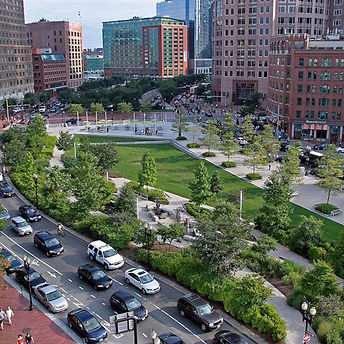
Constructed atop the Big Dig tunnel, the 1.5-mile Greenway replaced the Central Artery highway with gardens, fountains, and plazas connecting Boston’s historic neighborhoods. It includes distinctive areas like Chinatown Park and the North End fountains.


Community Effect
The Greenway reconnected communities physically and culturally, providing accessible spaces for art installations, farmers’ markets, and cultural events. Managed by a public-private conservancy, it remains a dynamic urban gathering space year-round.
Elements of Rose Kennedy Greenway
Boston’s Greenway demonstrates the social power of parks designed for inclusivity and adaptability. Re:space continues that legacy by merging ecological design with cultural storytelling that reflects the diversity of its surrounding neighborhoods.

Infrastructure Transformation
Replaced an elevated highway (the Central Artery) with a 1.5-mile green corridor above the Big Dig tunnel.
Neighborhood Reconnections
Reunited districts like Chinatown and the North End that had been divided for decades by vehicular infrastructure.

Localized Identity Design
Each park segment reflects its community’s culture, from Asian gardens to Italian-inspired fountains.

Dynamic Management Model
Operated by the Rose Kennedy Greenway Conservancy, blending public accountability with private agility.

Public Art Integration
Features rotating installations, fountains, and interactive sculptures that keep the park culturally alive.

Lesson for Re:Space
Reinforced Re:Space’s approach to cultural zoning and community-tailored design, ensuring the embankment celebrates Jersey City’s diversity through art and place-based identity.